
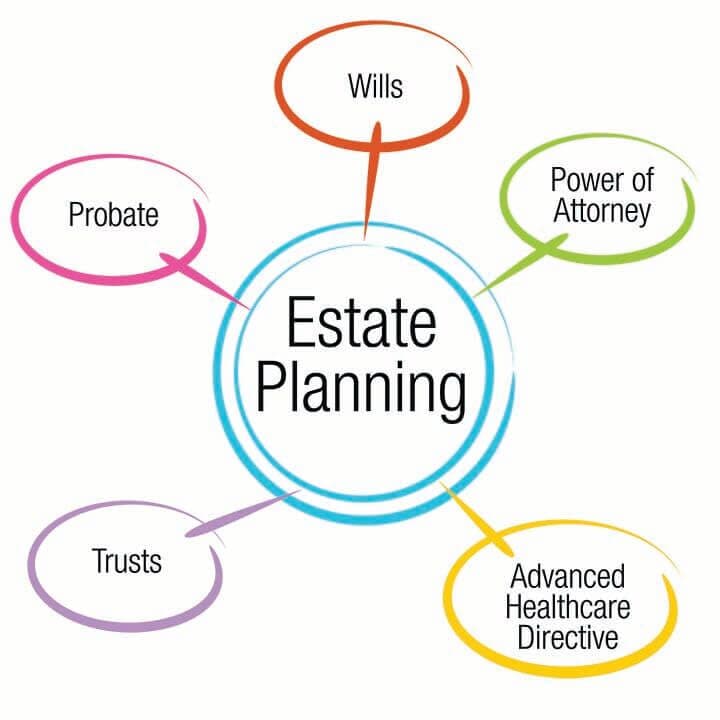
A retirement plan is incomplete without an estate plan. Beneficiary forms override wills, so an outdated form can undo your intent. Coordinating your advisor, attorney, and CPA around one household picture, not three separate files, keeps assets moving to the people you chose with less tax and less delay for your spouse.
You have spent decades building the income side of your retirement. The other half—what happens to your money, your home, and your spouse when one of you is not here to manage it—is usually held together by a will written years ago and beneficiary forms nobody has reviewed since the kids were small. We close that gap.
Most pre-retirees we meet have done the hard part. They have saved well. They have built a portfolio that survived the last three downturns. They have a 401(k), an IRA, perhaps a Roth, a brokerage account, or a small pension.
Then we ask one question:
If one of you went first tomorrow, would the other know what to do—and would the IRS take more than necessary on the way through?
That is where the room goes quiet.
Estate planning is not a separate legal chore that happens after the retirement plan. It is the second half of the same conversation. When the income plan and estate plan do not talk to each other, households leak money, clarity, and confidence at the exact moment a surviving spouse can least afford to lose any of the three.
This is not a problem of intent. It is a problem of coordination.
How many adults have an estate plan?
Up to 93% of investors want estate-planning services from their financial advisor. Only 22–34% of adults currently have an actionable estate plan in place.
Almost everyone wants it. Roughly two-thirds do not have it. The reason is usually the same: the financial advisor manages the portfolio, the attorney drafts the documents, the CPA files the return, and none of the three sees the whole household at once. Documents drift out of date, beneficiary forms contradict the will, and the strategy intended to protect a surviving spouse quietly stops working.
Coordination is the work. That is what we do here.
What do pre-retirees want from estate-planning guidance?
1. Beneficiary and tax-efficient distribution help
41% of clients want professional help with beneficiary designations and tax-efficient asset distribution.
Beneficiary forms override wills. Most households have at least one form that has not been updated since a job change, divorce, marriage, or death in the family. We review every form alongside your will and trust documents so the three tell the same story.
2. Plain-English education on what you need
37% want education on the basics—wills versus trusts, what each does, and who needs what.
You should not need a law degree to understand your own estate. We walk through the actual decisions—will, revocable living trust, powers of attorney, and healthcare directives—in language that respects your time and intelligence. You decide. We make sure the decision is informed.
3. Proactive reminders when life changes
33% want their advisor to remind them when documents need to be updated.
Most estate documents were not wrong when written. They became wrong because life moved: a child married, a parent passed, property was sold, tax law changed, or the household moved to another state. We track those triggers so you do not have to remember which one applies to which document.
4. Coordination with your attorney
35% want a full suite—drafting services or close collaboration between their advisor and estate attorney.
We do not draft your documents. Your estate attorney does that work, and well. Our role is to sit in the middle. We bring the household financial picture, Roth conversion strategy, Social Security timing, income floor, beneficiary forms, and tax projections to the attorney’s desk so the documents reflect the plan you have. If you do not have an attorney, we can introduce you to professionals we trust.
That division of labor is worth understanding on its own terms. See how a retirement income planner’s role differs from a general financial advisor before you decide who sits at the table.
Is a will enough, or do I need a trust too?
A decade ago, “estate plan” often meant “will.” That is no longer the default for many households we serve.
A will tells a probate court how you want your estate distributed. Probate is public, lengthy, and expensive in many states. A revocable living trust, properly funded, generally bypasses probate. For many households with a home, children, retirement accounts, and meaningful assets, a revocable living trust may be closer to standard practice than optional planning.
“Properly funded” is doing the heavy lifting in that sentence. A trust that exists on paper but does not own the assets it was intended to hold is one of the most common failures we see. Trust funding is part of what we coordinate.
| Will only | Revocable living trust (funded) | |
|---|---|---|
| Goes through probate | Yes | Generally no |
| Becomes public record | Yes, in most states | No |
| Takes effect | At death | While you are alive, and at death |
| Covers incapacity | No; needs a separate power of attorney | Often, through successor trustee provisions |
| Requires retitling assets | No | Yes, for bank and brokerage accounts and real estate; retirement accounts pass by beneficiary form |
The trust column only holds if the retitling happens. That is the step most households skip.
What does coordinated estate planning look like?
Our role is not to replace your attorney or CPA. It is to make sure all three of us are looking at the same picture.
- Document inventory. Wills, trusts, powers of attorney, healthcare directives, and every beneficiary designation across every account—read together.
- Beneficiary alignment. We confirm that every named beneficiary still reflects your intent and coordinates with the will or trust.
- Trust funding review. If you have a trust, we confirm what the trust owns, not what it was supposed to own.
- Tax coordination. Roth conversion timing, step-up in basis at death, state estate-tax exposure, and IRA inheritance rules for adult children are considered before documents are finalized.
- Attorney handoff. We brief your attorney with a one-page financial picture so the meeting starts where it should.
- Spouse alignment. Both of you are in the room, understand the plan, and know what to do if the other is not there.
- Life-event triggers. We track events that should prompt a document update and tell you when one occurs.
Most adult children who inherit an IRA must now empty the account within 10 years under current IRS rules, often while still working and in their own peak earning years. That collision between an inherited account and a high tax bracket is easier to plan around before it happens than after. Our RMD exposure guide walks through how forced distributions stack on top of other income, for you and for the children who inherit from you.
We do not sell estate documents, and we do not draft them. We coordinate your existing professionals around a household plan that reflects what you and your spouse want—and make sure the documents follow.
Statistics cited above: Vanilla Estate Planning Statistics & Facts; D.A. Davidson; Slater Elder Law; eMoney Advisor; and WealthManagement.com.
What does this mean for the two of you?
Start with the document that would matter most if one of you needed it this week: your beneficiary forms. Pull the most recent statement for every 401(k), IRA, and life insurance policy. Compare the named beneficiary against your will and trust. A mismatch there overrides what the will says, no matter how carefully the will was drafted.
Next, ask your attorney or advisor whether your trust, if you have one, owns your home, your bank and brokerage accounts, and your business interest. A trust that was signed but never funded protects nobody.
Then bring your tax picture into the same room as the legal one. A Roth conversion executed in the wrong year, or a large IRA left to an adult child with no distribution plan, can undo years of careful saving in a single tax season. This is the kind of coordination a Retirement Income Roadmap is built to catch, before a document gets signed, not after.
Robert Boeck works the distribution side of retirement planning: tax sequencing, withdrawal order, and the coordination that keeps an estate plan and an income plan telling the same story. Schedule a conversation to walk through where your documents and your numbers stand today.
Common questions
- Does a will avoid probate?
- No. A will tells a probate court how to distribute your estate, and probate is a public, court-supervised process. A properly funded revocable living trust generally avoids probate, because the trust, not you individually, holds title to the assets.
- What happens if my beneficiary forms don’t match my will?
- The beneficiary form usually wins. Retirement accounts, life insurance, and many bank accounts pass by beneficiary designation regardless of what the will says. Outdated forms are one of the most common ways an estate plan fails to carry out its owner’s actual intent.
- Does Robert Boeck draft estate planning documents?
- No. Robert Boeck coordinates the financial and tax side of your plan and works alongside your estate attorney, who drafts the will, trust, and related documents. If you do not have an attorney, Retirement Roadmap Experts can introduce you to one.
- How often should we review our estate plan?
- Review beneficiary forms and core documents after any major life event: a marriage, divorce, birth, death in the family, home sale, or move to a new state. Without a trigger event, a review every few years still catches drift before it becomes a problem.
If the decisions on this page are ahead of you, the two of you can work through them with Robert Boeck before any of them becomes permanent.
Schedule Your Consultation