

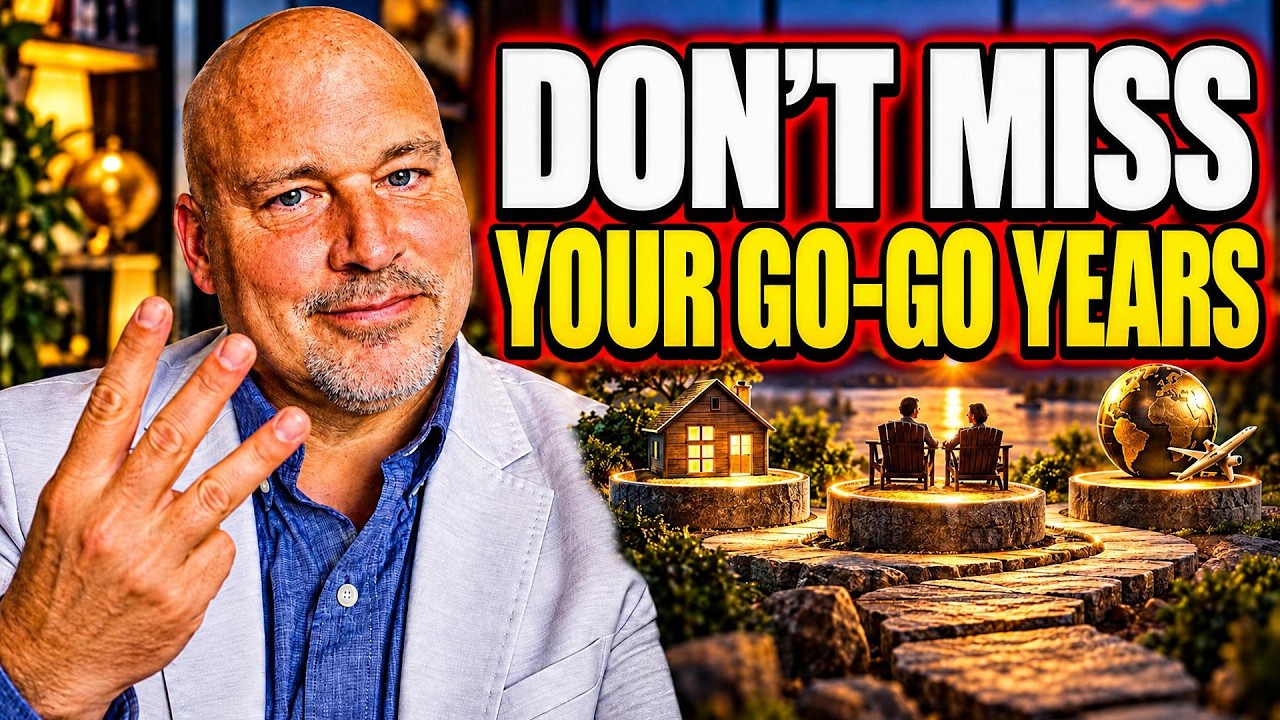
Research on the retirement spending smile suggests spending often starts higher, eases in the middle years and can rise again late in life with health care. A flat-line withdrawal plan may underfund the active early years. Planning around three chapters, Go-Go, Slow-Go and No-Go, starts with three questions you and your spouse answer together.
- Spending in retirement often does not run flat, so a flat-line withdrawal plan can miss the years you most want to enjoy.
- Two questions most couples have never said out loud: the one trip you would be heartbroken to miss, and which dream gives way if one of you needs care at 82.
- A balance is a number. A plan assigns income to each chapter, in a form you and your spouse both understand.
What is the retirement spending smile?
Most retirement projections assume you will spend the same inflation-adjusted amount every year until the end. The research looks different. David Blanchett, writing while at Morningstar, described what became known as the “retirement spending smile”: spending tends to start strong, ease off in the middle years, and can rise again late in life as health care takes a bigger share of the budget. Morningstar’s own summary notes that the median household devotes about 10% of its spending to health care at age 65 and about 20% by age 85.
These are averages, and some households never follow the curve. Treat it as a reason to question a flat line, not as a forecast of your own spending.
Why can a flat-line withdrawal plan miss?
A flat-line plan draws the same amount from your 401(k) and IRAs every year. If your real spending is higher in the early years, that plan can underfund your Go-Go years and leave the best experiences on the table. If costs rise again late in life, it may not have been built for that either. Results depend on your spending, your accounts and the markets, and every approach involves trade-offs.
What are the three chapters of retirement?
Robert describes retirement as three chapters instead of one long average:
- Go-Go. Your sixties are full. This is when the trips and big experiences are most likely to happen, while health and energy allow.
- Slow-Go. Your seventies slow down by choice, not by panic. Spending may ease, and the plan should let that happen on purpose.
- No-Go. Your eighties are covered, with a plan your spouse understands as well as you do.
What three questions should you and your spouse answer?
These come straight from the video, and they are worth answering out loud, together.
Question one: what is the one trip you would be heartbroken never to take? And by what age does it realistically need to happen? A date turns a wish into something a plan can fund.
Question two: if one of you needed care at 82, which dream would the other have to give up? Robert says most couples he meets with have never said that out loud. Saying it is the first step toward planning for it, including how the other spouse is supported.
Question three: are you holding back on spending, right now or in your plans, because deep down you don’t fully trust your plan? In Robert’s experience, that is the real reason great savers never enjoy their money. A number is not a plan. A life is.
What does a plan built around the three chapters include?
It starts with your answers, then works backward to income. That often means deciding which accounts fund the early years, how withdrawals are ordered for taxes, and how spending is allowed to change by chapter. The Retirement Income Roadmap is the written version of that plan, and the guide to which account to withdraw from first explains one of its biggest levers. If you retire before 65, the health insurance gap belongs in the plan as well.
Where can you start?
If you are unsure whether your savings can fund all three chapters, book a Retirement Clarity Call. It is thirty minutes, with no products and no pitch. Feeling overwhelmed is normal. Staying overwhelmed is optional.
Common questions
- What is the retirement spending smile?
- It is a pattern found in research by David Blanchett, who worked at Morningstar when he published it. Inflation-adjusted spending tends to be higher in early retirement, to ease through the middle years and to rise again at older ages as health care costs grow. It describes averages, and an individual household may look different.
- What are the Go-Go, Slow-Go and No-Go years of retirement?
- They are shorthand for three chapters. Go-Go is the active early years, often the sixties, when travel and big experiences are most likely. Slow-Go is a quieter stretch, often the seventies. No-Go is the later years, often the eighties, when care and health costs can matter most.
- Does retirement spending always rise late in life?
- No. Health care often takes a larger share of the budget at older ages, but some households cut other spending at the same time, and the pattern varies. That is why a plan tests more than one spending path instead of assuming a single flat line.
Watch the full-length video
If the decisions on this page are ahead of you, the two of you can work through them with Robert Boeck before any of them becomes permanent.
Schedule Your Consultation